PMI-CPMAI Exam Preparation
Introduction
Artificial intelligence is no longer a side conversation in construction project management it is becoming part of how projects are planned, monitored, and delivered. As firms adopt AI-driven tools for scheduling, risk forecasting, and resource planning, the PMI-CPMAI certification has emerged as a credential that signals a professional understands both project management fundamentals and applied AI methodology. Yet many candidates approach the exam without a clear roadmap, relying on scattered notes or last-minute cramming instead of a structured plan. This often leads to wasted study hours and unnecessary exam-day stress. This guide walks through what the PMI-CPMAI exam actually tests, how to build a realistic study plan, which resources are worth the time and the mistakes that trip up first-time candidates so preparation feels organized rather than overwhelming.
What Is the PMI-CPMAI Certification?
Overview of PMI-CPMAI
PMI-CPMAI (Certified Project Manager – AI) is a credential built around applying artificial intelligence methodology within project environments, including construction and infrastructure delivery. It validates that a professional can move beyond traditional planning and actually integrate AI-based decision-making into how a project is scoped, executed and monitored. Candidates who want the fuller picture of what this credential covers before diving into exam prep can start with this overview of PMI's AI project management certification.
Why the Certification Matters
As construction firms adopt predictive analytics, digital twins and automated reporting, employers increasingly look for project leaders who can bridge conventional project controls with AI-informed workflows. Holding this certification signals that a candidate can operate confidently in that intersection rather than treating AI as an outside tool.
Who Should Pursue PMI-CPMAI?
- Construction Project Managers
- Project Engineers
- PMO Professionals
- AI and Digital Transformation Leaders
- Construction Consultants
- Infrastructure Professionals
Professionals weighing whether this certification fits their next career move can also review this career advisory guidance before committing to a study timeline.
Understand the PMI-CPMAI Exam Before You Begin
Exam Objectives
The exam is designed to measure whether a candidate can apply AI concepts within real project scenarios rather than simply define terms. This means questions often present a situation and ask what the correct AI-informed response would be.
Key Knowledge Areas
Candidates should expect coverage across AI fundamentals, project lifecycle integration, data handling, risk forecasting and ethical considerations tied to automated decision-making.
Exam Format
The exam typically combines scenario-based and knowledge-based multiple-choice questions, requiring both conceptual understanding and applied judgment.
Skills Assessed
Beyond recall, the exam checks whether a candidate can evaluate data quality, judge when AI tools add value versus risk and communicate AI-driven insights to non-technical stakeholders.
Importance of Understanding the Exam Blueprint
Reviewing the official exam content outline before studying prevents candidates from over-preparing on topics that carry little weight while under-preparing on core areas. This single step often has the biggest impact on exam-day confidence.
Create an Effective PMI-CPMAI Study Plan
Assess Your Current Knowledge
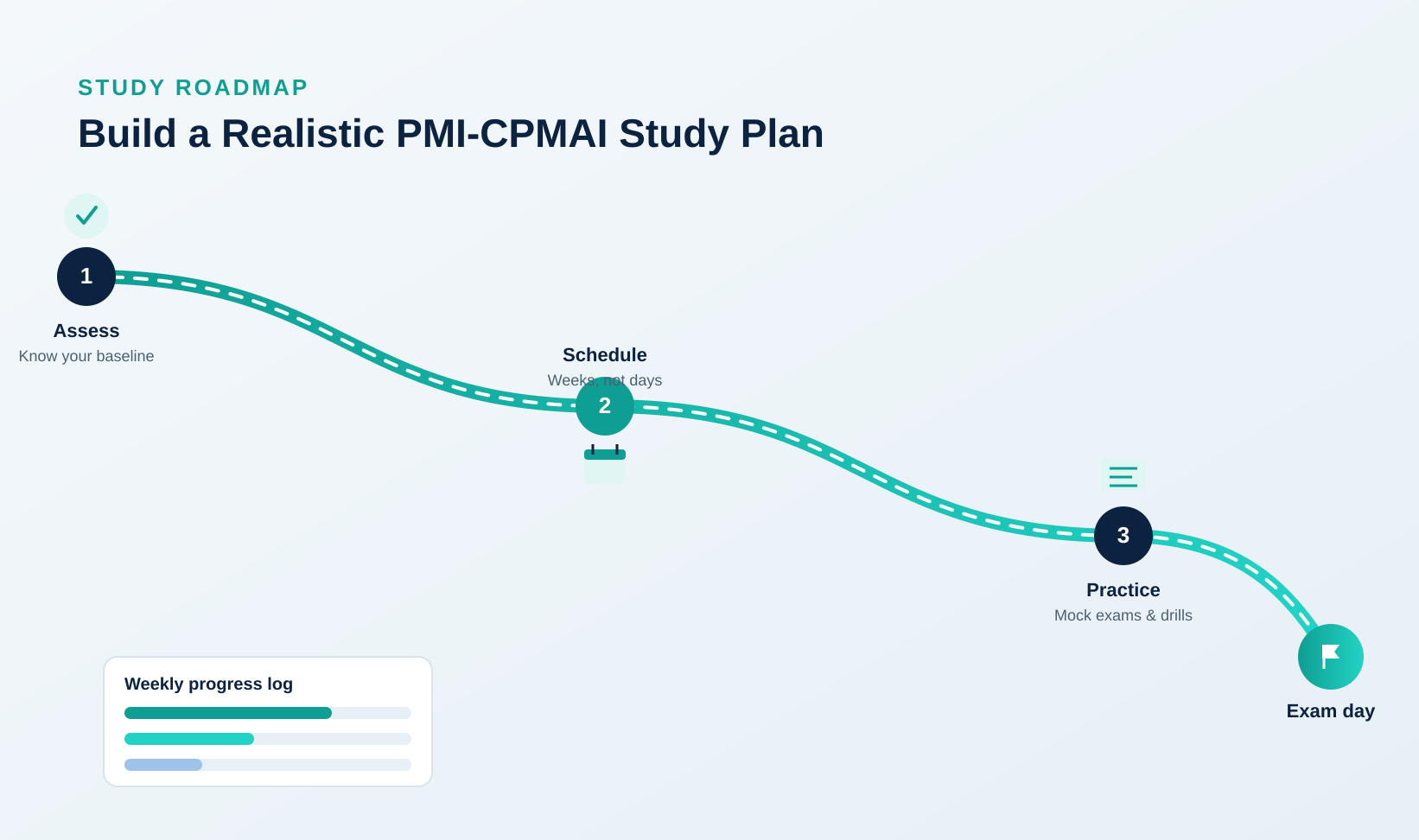
Before opening a single resource, it helps to honestly map out which knowledge areas feel familiar and which feel unfamiliar. Candidates coming from a traditional project management background often need more time on AI-specific concepts, while those from a technical background may need more time on project governance topics.
Set a Realistic Study Schedule
A rushed timeline is one of the most common reasons candidates underperform. Setting a schedule that spans several weeks, with room for review, tends to produce better retention than compressing everything into a short burst.
Divide Topics into Weekly Goals
Breaking the exam content outline into weekly blocks rather than trying to absorb everything at once makes the material easier to retain and easier to track.
Track Your Learning Progress
Keeping a simple log of topics covered, along with confidence ratings, helps identify which areas need a second pass before the exam date arrives.
Balance Reading, Practice and Revision
Reading alone rarely translates into exam readiness. Alternating between reading material, answering practice questions and revisiting weak areas builds the kind of applied understanding the exam actually tests.
Best Study Resources for PMI-CPMAI Exam Preparation
Official PMI Learning Resources
PMI's own materials remain the most reliable starting point, since they are aligned directly with what the exam measures.
PMI-CPMAI Exam Content Outline
The official outline should function as a checklist throughout preparation, not just a document read once at the start.
Instructor-Led Training
Structured, instructor-led classes can help candidates who benefit from guided pacing and the ability to ask questions in real time rather than working through material alone. Programs such as the PMI-CPMAI live classes are built around this kind of structured, scenario-driven preparation for exactly this reason.
Practice Questions
Regular practice questions expose gaps in understanding earlier, when there is still time to address them.
Mock Exams
Full-length mock exams help candidates build the stamina and time-management skills the real exam demands.
Professional Communities and Study Groups
Discussing tricky scenarios with peers preparing for the same exam often clarifies concepts faster than solo review.
Organizations preparing several team members for this certification at once may find it more efficient to explore corporate training options rather than having each employee study in isolation.
Key Topics to Focus On During Preparation
AI Fundamentals for Construction
A working understanding of how AI models are trained, tested and applied is essential before diving into construction-specific use cases.
Construction Project Lifecycle
Candidates need to know where AI tools typically integrate into planning, execution and closeout phases.
Risk Management with AI
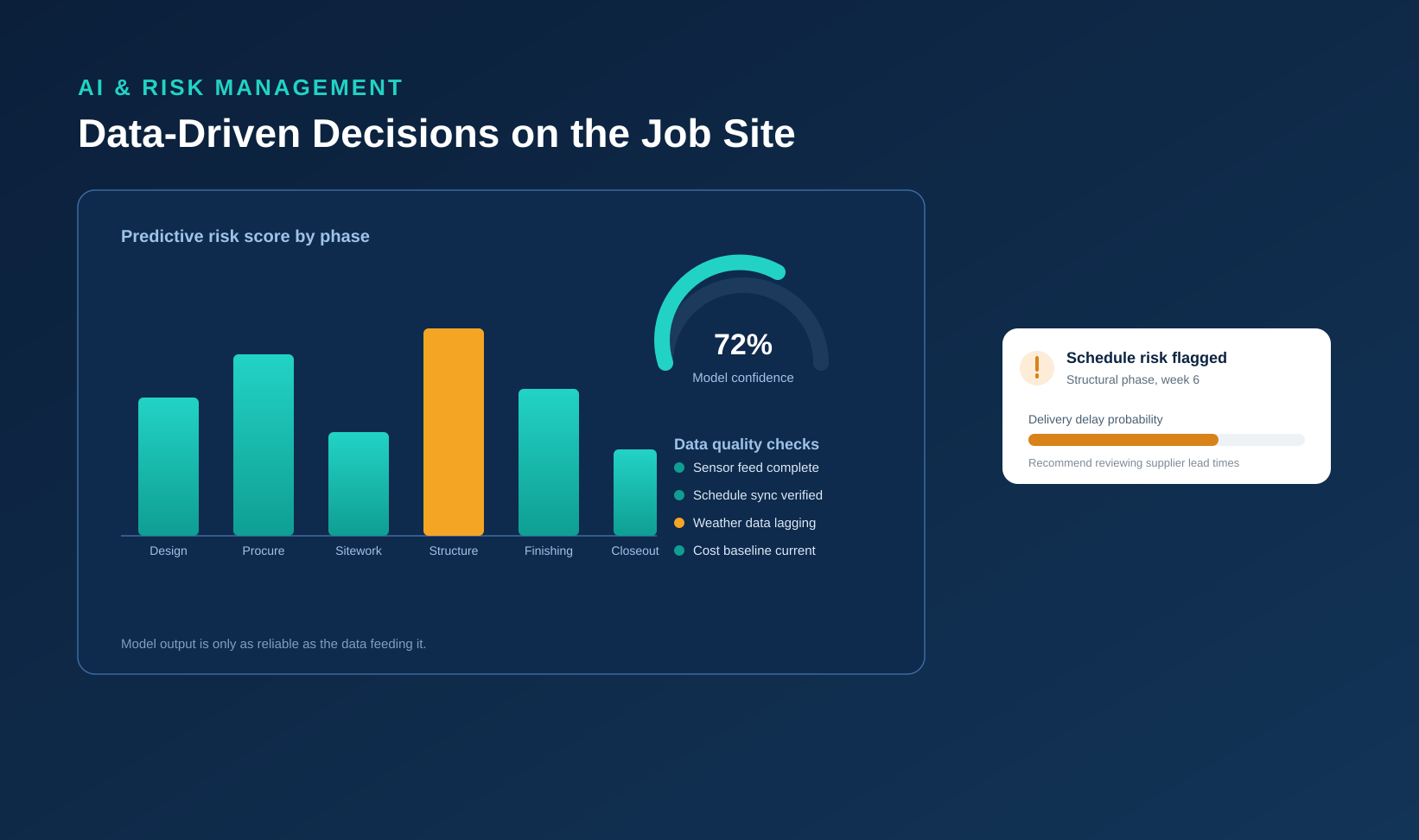
Predictive risk modeling is a recurring exam theme, so candidates should understand both its strengths and its limitations.
Data-Driven Decision Making
The exam frequently tests whether a candidate can judge data quality before trusting a model's output.
Ethics and Responsible AI
Bias, transparency, and accountability in automated decisions are increasingly emphasized areas of the exam. This ties closely to the broader question of what AI leadership capability actually looks like in practice, beyond passing a single exam.
Digital Transformation in Construction
Understanding how AI fits into broader digital transformation efforts helps candidates answer higher-level strategic questions with more confidence.
Common Mistakes Candidates Should Avoid
- Studying without a structured plan
- Ignoring the official exam content outline
- Relying only on theory without practicing scenarios
- Skipping mock exams
- Underestimating how heavily AI concepts are weighted
- Not reviewing weak areas a second time before the exam
These same gaps in judgment show up beyond the exam room too the same article on why AI projects fail when they're managed the wrong way makes a similar point about preparation and process mattering more than the technology itself.
Exam Day Tips for Success
Candidates should confirm their identification and exam setup requirements well in advance to avoid last-minute stress. During the exam, reading each question carefully rather than rushing to the first plausible answer reduces avoidable mistakes. Managing time by pacing through sections evenly, staying calm under pressure and reviewing flagged questions before final submission all contribute to a stronger overall result.
Final Thoughts
Passing the PMI-CPMAI exam comes down to structured, consistent preparation rather than last-minute memorization. Candidates who focus on understanding how AI concepts apply within real project scenarios rather than memorizing definitions tend to walk into the exam room with more confidence. As AI continues to reshape how construction projects are planned and delivered, this certification is likely to carry growing weight in hiring decisions, making disciplined preparation now a worthwhile investment. Approaching the exam with a clear plan, consistent practice, and a willingness to keep learning as the field evolves is what ultimately separates candidates who pass on their first attempt from those who don't.
Frequently Asked Questions (FAQ)
How long should I prepare for the PMI-CPMAI exam?
Most candidates benefit from a preparation window of several weeks, allowing enough time to cover the exam content outline in full and revisit weaker areas before the exam date.
What are the best study resources?
A combination of official PMI materials, the exam content outline, practice questions, mock exams and structured instructor-led sessions tends to produce the most consistent results.
Is prior AI experience required?
Prior AI experience is helpful but not mandatory. Many candidates with a traditional project management background pass by focusing extra study time on AI-specific concepts.
How many mock exams should I complete?
Completing at least two to three full-length mock exams before the real exam helps build both confidence and time-management skills.
Can I pass the exam on my first attempt?
Yes, many candidates pass on their first attempt when they follow a structured study plan, use the official exam content outline as a guide and practice consistently with mock exams.