PMI-PMOCP Training:
Introduction
The role of the Project Management Office has changed. A PMO is no longer judged by how well it tracks status reports; it is judged by how directly it moves strategy into results. That shift has created real demand for professionals who understand PMO governance, portfolio oversight and PMO delivery at a strategic level not just an administrative one.
This is exactly the gap PMI-PMOCP training was built to close. Introduced by the Project Management Institute, the PMI Project Management Office Certified Professional credential is designed for people who lead, influence or want to lead a PMO through this shift. Interest in structured PMI-PMOCP training has grown quickly as organizations look for leaders who can connect governance to business outcomes.
This guide walks through what PMI-PMOCP training actually covers, who benefits most from it and how to choose a training provider that delivers real, applicable skill rather than just exam preparation.
What Is PMI-PMOCP?
Overview of the PMI Project Management Office Certified Professional (PMI-PMOCP)
PMI-PMOCP is a certification created for professionals responsible for building, running or maturing a Project Management Office. It focuses less on individual project execution and more on how a PMO functions as a strategic unit setting standards, managing portfolios and proving the value it delivers to the organization.
Why PMI Introduced PMI-PMOCP
PMI introduced this certification in response to a pattern seen across industries: PMOs were often treated as reporting functions rather than strategic ones. As organizations began asking PMOs to justify their existence in measurable business terms, PMI recognized the need for a credential that validates PMO leadership as a distinct discipline, separate from general project management certifications.
Who Should Consider PMI-PMOCP Training?
PMI-PMOCP training is relevant to a specific group of professionals, including:
- PMO Managers
- PMO Directors
- Project Managers moving into governance roles
- Program Managers
- Portfolio Managers
- Business Transformation Leaders
Anyone whose responsibilities touch PMO structure, governance or portfolio decision-making will find the training directly applicable. Professionals unsure whether this is the right next step can also speak with a career advisor before enrolling to map the certification against their career goals.
What You'll Learn in PMI-PMOCP Training
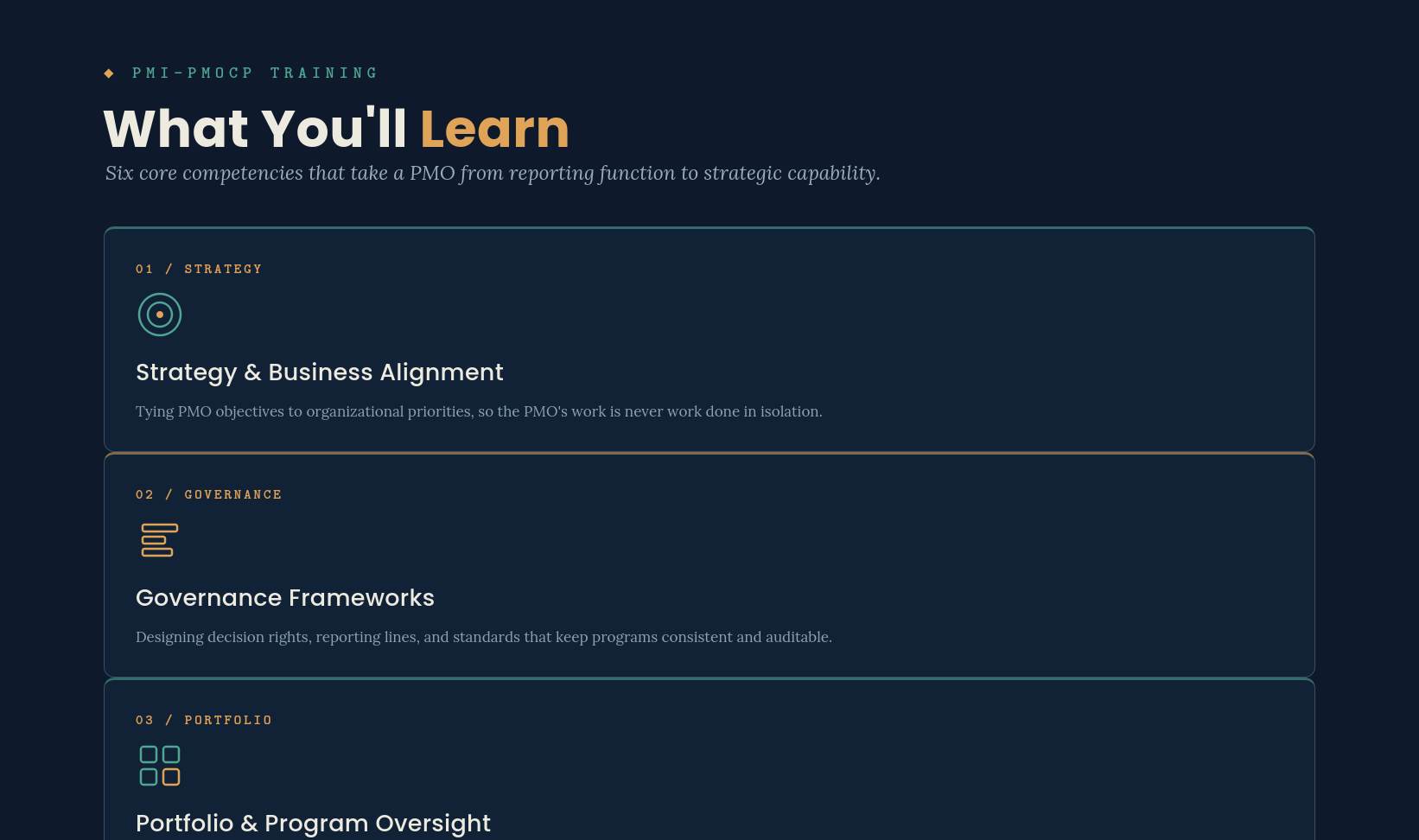
A well-structured PMI-PMOCP certification training program covers the full scope of what a modern PMO is expected to deliver.
PMO Strategy and Business Alignment
Participants learn how to align PMO objectives with broader organizational strategy, ensuring the PMO's work is tied to measurable business priorities rather than operating in isolation.
PMO Governance Frameworks
The training covers how to design and apply governance structures decision rights, reporting lines and standards that keep projects and programs consistent and auditable. This ties closely to the broader shift discussed in PMO transformation: the 6-step roadmap to strategic value, which lays out how a PMO moves from basic oversight to a governance-driven function.
Portfolio and Program Oversight
This section addresses how PMOs monitor multiple programs and portfolios simultaneously, balancing resource constraints against strategic priority.
Performance Measurement and KPIs
Professionals learn how to define and track KPIs that actually reflect PMO performance and business impact, rather than vanity metrics like task completion counts.
Resource and Capacity Management
Training covers how a PMO forecasts, allocates and rebalances resources across competing projects a core function that directly affects delivery timelines.
Benefits Realization and Value Delivery
Perhaps the most strategic component: how to track whether a project's promised benefits were actually realized after delivery, not just whether it was completed on time. This is the same principle explored in from delivery to value: why systems thinking is non-negotiable for PMO leaders.
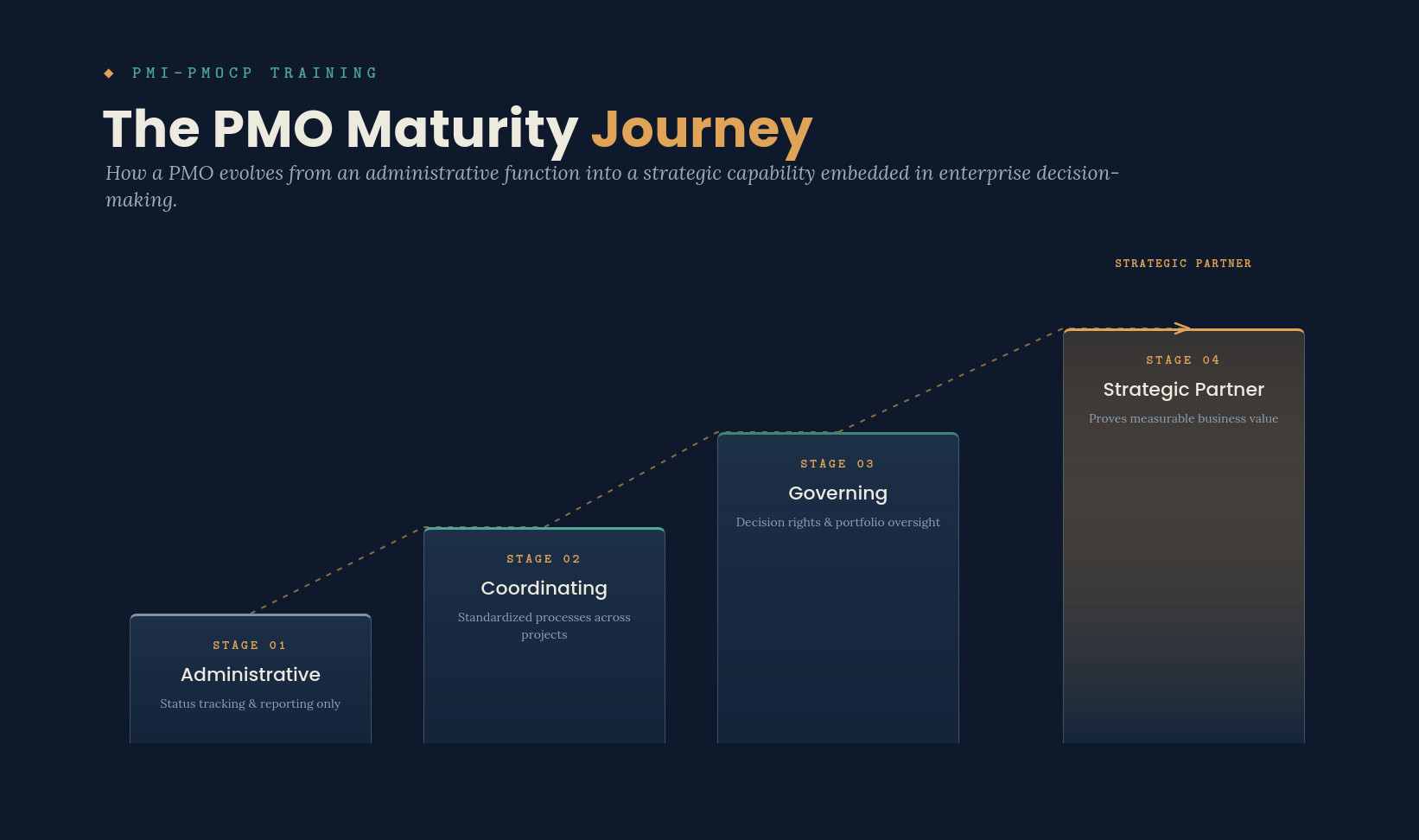
Organizational Change and PMO Maturity
Finally the training addresses how PMOs evolve moving from a basic administrative function toward a mature, strategic capability embedded in enterprise decision-making, a journey covered in more depth in from PMO support function to strategic partner.
Benefits of PMI-PMOCP Training
Structured PMO certification training delivers benefits that extend well beyond passing an exam:
- Develops strategic leadership skills specific to PMO roles
- Improves overall PMO effectiveness and consistency
- Strengthens governance practices across programs
- Enhances decision-making at the portfolio level
- Supports enterprise transformation initiatives
- Increases professional credibility with PMI-backed certification
- Expands career opportunities into senior PMO and portfolio leadership roles
Who Should Enroll in PMI-PMOCP Training?
While the certification is broadly relevant to PMO professionals, it is particularly valuable for:
- Experienced Project Managers ready to move into governance-focused roles
- PMO Leaders looking to formalize their expertise
- Portfolio Managers overseeing multiple concurrent programs
- Program Managers who coordinate across several projects
- Business Analysts working closely with PMO functions
- Executives responsible for project governance and oversight
These professionals typically already have exposure to project delivery and are looking to move into a more strategic, oversight-focused capacity. Those coming from a program or portfolio background may already hold or be working toward related credentials such as PgMP or PfMP, both of which complement PMI-PMOCP well since they share a similar focus on multi-project oversight. Professionals still early in their certification journey may want to start with PMP certification before moving into PMO-specific training.
How to Choose the Right PMI-PMOCP Training Provider
Not all PMI PMO course offerings are built the same way and the choice of provider often determines how much practical value a learner walks away with.
Experienced PMI-Certified Instructors
Instructors should have real, hands-on PMO leadership experience not just familiarity with the exam content. Reviewing a provider's about page is usually a quick way to check whether instructors have actual PMO leadership backgrounds or are purely exam-prep trainers.
Comprehensive Course Content
The course should cover the full breadth of the PMI-PMOCP exam content outline, not a condensed summary.
Interactive Live Sessions
PMI-PMOCP live training sessions allow participants to ask questions in real time and work through governance scenarios with an instructor, which builds deeper understanding than self-paced video alone.
Practice Exercises and Case Studies
Applied case studies help learners connect PMO theory to real organizational situations they are likely to face.
Mock Exams and Learning Resources
Practice exams help identify knowledge gaps before the actual certification exam, reducing the risk of an unnecessary retake. Many providers also offer a free class preview so learners can evaluate teaching style before committing to a full program.
Post-Training Support
The best providers offer support after the course ends whether that's access to instructors, study groups or additional resources rather than ending contact the moment the class finishes.
Programs like SNSCCS's PMI-PMOCP live training are structured around these exact principles: experienced instructors, live interactive sessions, and practical case studies aimed at building real PMO leadership capability, not just exam recall.
Tips to Get the Most from Your PMI-PMOCP Training
Enrolling is only the first step. Getting real value from PMO professional training depends on how it's approached:
- Set clear learning goals before the course begins
- Participate actively in discussions rather than passively watching
- Apply concepts to real, current projects at work
- Review training materials regularly instead of cramming
- Join professional communities of PMO practitioners
- Continue learning after the training ends, since PMO practices keep evolving the SNSCCS blog is a useful ongoing resource for this
Common Mistakes Professionals Make When Choosing PMO Training
A few recurring mistakes tend to reduce the value professionals get from PMO training programs:
- Focusing only on price instead of course depth
- Ignoring instructor expertise and real PMO experience
- Choosing outdated course material that doesn't reflect current PMI standards
- Skipping practical exercises in favor of theory-only formats
- Not verifying that the course aligns with official PMI content
- Overlooking whether post-course support is available
Avoiding these mistakes usually comes down to research comparing a few providers' course outlines and instructor backgrounds before enrolling. Organizations enrolling teams rather than individuals should also check whether a provider offers corporate training or executive training formats, since group needs differ from individual exam prep.
Final Thoughts
PMO capabilities are becoming a genuine strategic advantage rather than a back-office function. Organizations increasingly expect their PMOs to prove value, not just track it and that shift is exactly what PMI-PMOCP training prepares professionals for.
Structured, well-delivered training one that combines PMI-aligned content with practical case studies and experienced instruction makes the difference between passing an exam and being ready to lead a modern PMO. Professionals evaluating their options should weigh course depth, instructor experience and post-training support carefully and treat certification as one part of an ongoing commitment to staying current in PMO practice.
Those ready to build this capability can explore SNSCCS's PMI-PMOCP live training program for a structured, instructor-led path toward the certification.
Frequently Asked Questions (FAQ)
What is PMI-PMOCP training?
It is structured training designed to prepare professionals for the PMI Project Management Office Certified Professional exam, covering PMO governance, portfolio oversight and value delivery.
Who should take PMI-PMOCP training?
PMO managers, directors, program and portfolio managers and professionals moving from project delivery into PMO leadership roles.
What skills will I gain?
Participants gain skills in PMO governance, benefits realization, resource management, performance measurement and aligning PMO work with business strategy.
Is PMI-PMOCP training suitable for experienced PMO professionals?
Yes. Even experienced professionals benefit from the structured governance frameworks and strategic alignment concepts covered in the course, which formalize skills often learned informally on the job.
How do I choose the best PMI-PMOCP training provider?
Look for experienced PMI-certified instructors, live interactive sessions, practical case studies, mock exams and post-training support not just low pricing. Providers should also be easy to reach directly through a contact page for questions before enrolling.