Introduction — Why Delivering the Right Solution Matters
Project success is often measured by three familiar markers: time, budget and scope. Yet a project can meet all three and still fail the organization, because it solves the wrong problem. When business needs are misunderstood, teams build features nobody asked for, requirements shift midstream and stakeholders end up dissatisfied despite a completed deliverable. This gap between finishing a project and finishing the right project is where business analysis becomes essential. PMI-PBA®, PMI's Professional in Business Analysis certification, is built specifically around this discipline. Rather than focusing only on execution, PMI-PBA® trains professionals to understand why a project exists in the first place and to keep that understanding intact from the first requirement to the final outcome.
What Is PMI-PBA® Certification?
Overview of PMI Professional in Business Analysis
PMI describes the PMI-PBA® as recognizing expertise in business analysis and the ability to apply proven tools and techniques to improve project outcomes. It is designed for professionals who sit at the intersection of business needs and project delivery translating vague organizational goals into requirements a team can actually build against. Programs such as SNSCCS's PMI-PBA® live classes are structured around this same idea: certification knowledge only matters when it can be applied to real project situations.
What Does Business Analysis Involve?
At its core, business analysis covers needs assessment, stakeholder engagement, requirements management, traceability and solution evaluation. Each of these functions works together so that a proposed solution can be checked against the problem it was meant to solve.
Why Business Analysis Matters in Projects
Business analysis connects business needs directly to project outcomes. It reduces ambiguity in requirements, closes the gap between what stakeholders assume and what delivery teams hear and gives teams a shared reference point throughout the project lifecycle.
Why Projects Sometimes Deliver the Wrong Solution
Several recurring issues cause projects to miss the mark even when they are technically well managed:
- Poor understanding of business needs — teams jump to a solution before the underlying problem is clear.
- Incomplete or unclear requirements — gaps get filled with assumptions rather than validated information.
- Limited stakeholder involvement — key perspectives are missing from early decisions.
- Changing business priorities — requirements are locked in before the business context stabilizes.
- Focusing on deliverables instead of outcomes — teams ask did we build what was requested? instead of did we solve the problem the organization actually needed to solve?
That second question is the one business analysis is built to answer.
6 Ways PMI-PBA® Helps Professionals Deliver the Right Solution
1. Starts With the Business Need
PMI-PBA® concepts push professionals to identify the underlying problem before jumping to a solution. This means understanding organizational objectives and being able to explain, clearly, why a project is necessary in the first place not just what it should produce.
2. Improves Stakeholder Engagement
Business analysis places heavy emphasis on identifying the right stakeholders early and understanding that different groups often have different, sometimes conflicting, expectations. Skilled facilitation and communication help build alignment before requirements are finalized, not after.
3. Strengthens Requirements Management
Rather than collecting requirements informally, PMI-PBA® encourages a systematic approach: gathering requirements deliberately, analyzing and documenting them clearly, resolving ambiguity early and maintaining them as the project evolves.
4. Connects Requirements With Business Objectives
Traceability is a core business analysis practice. It links every requirement back to a specific business outcome, which also makes it easier to identify requirements that add cost or complexity without contributing real value.
5. Supports Better Solution Evaluation
A solution can be technically functional and still fail the business. PMI-PBA® principles guide professionals to evaluate whether a proposed solution actually addresses the original need, assess expected benefits realistically and identify gaps between what was requested and what was delivered.
6. Encourages Value-Focused Delivery
Finally, business analysis keeps delivery grounded in value. That means prioritizing high-impact requirements, keeping stakeholder needs central to decisions, focusing on measurable business outcomes and avoiding unnecessary features that inflate scope without improving results.
PMI-PBA® and the Business Analysis Lifecycle
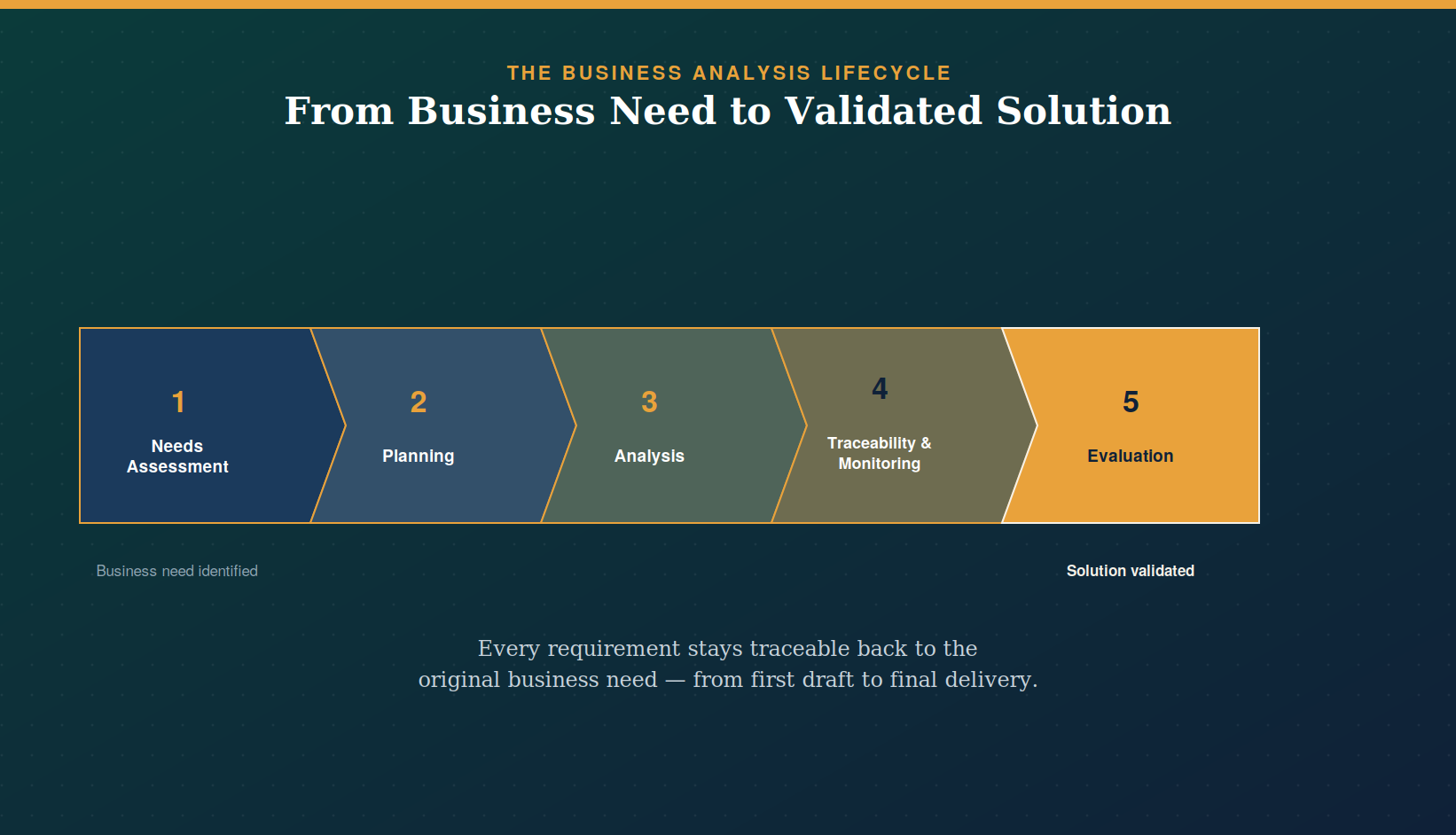
PMI-PBA® is organized around a lifecycle that keeps business need and delivered solution connected at every stage:
- Needs assessment — identifying the business problem and desired outcome.
- Planning — determining how business analysis activities will be carried out.
- Analysis — gathering, analyzing, and refining requirements.
- Traceability and monitoring — tracking requirements as the project develops.
- Evaluation — determining whether the delivered solution actually meets the business need.
This structure is detailed further in the PMI-PBA® examination content outline, which breaks down how each domain is tested and applied. Together these stages create a continuous thread from business need through requirements, into the solution and finally to measured outcomes rather than treating each phase as an isolated task.
How PMI-PBA® Improves Stakeholder Collaboration
Business analysts frequently act as the bridge between business stakeholders, project teams, technical specialists and decision-makers. PMI-PBA® principles support this role by encouraging professionals to understand different stakeholder perspectives, ask better clarifying questions, manage conflicting requirements constructively and build shared understanding across groups that may not naturally speak the same language. Improving communication between business and technical teams reduces the number of assumptions that quietly make their way into a final solution.
How PMI-PBA® Supports Better Requirements and Decision-Making
Disciplined requirements practices reduce misunderstandings, unnecessary rework and the gap between what stakeholders expect and what a project actually delivers. This includes writing clearer requirements, prioritizing them based on business value, maintaining traceability, managing change formally rather than informally and validating the final solution against the original need. Professionals preparing for certification often review the PMI-PBA® certification requirements to understand the experience and education criteria involved before applying these practices on the job.
Who Can Benefit From PMI-PBA® Knowledge?
Business analysis skills are not limited to professionals with business analyst in their title. They benefit anyone involved in requirements, stakeholder engagement, solution definition or project decision-making, including:
- Business analysts
- Project managers
- Product and solution professionals
- Requirements professionals
- Consultants
- Project and program team members
How Professionals Can Apply PMI-PBA® Concepts at Work
Certification knowledge holds the most value when it is used beyond the exam itself. In practice that means asking why? before what?, identifying the real business problem, engaging stakeholders early rather than after requirements are locked, documenting and prioritizing requirements, maintaining traceability throughout delivery, validating the solution against expected outcomes, and measuring whether the solution actually created value. Structured preparation, such as SNSCCS's PMI-PBA® live classes, is built around applying these habits to real project scenarios rather than memorizing definitions supported further by resources like the PMI-PBA® exam preparation guide.
Final Thoughts — From Requirements to the Right Solution
Delivering a project is not the same as delivering value. Real success depends on understanding business needs, engaging stakeholders properly, managing requirements with discipline, maintaining traceability and evaluating outcomes honestly. PMI-PBA® knowledge strengthens each of these capabilities, but it works best when professionals apply it to actual projects rather than treating it as exam content alone. Professionals who understand why a solution is needed, what stakeholders truly require and how value will be measured are simply better positioned to deliver outcomes that matter.
Frequently Asked Questions (FAQ)
What is PMI-PBA® certification?
PMI-PBA® is a PMI credential that recognizes expertise in business analysis, including needs assessment, requirements management, stakeholder engagement and solution evaluation.
How does PMI-PBA® help professionals understand business needs?
It provides a structured approach to identifying the underlying business problem before a solution is selected, rather than starting with assumptions.
Why are requirements important for project success?
Clear, well-managed requirements reduce ambiguity, prevent rework, and keep delivery teams aligned with what the business actually needs.
Who should consider PMI-PBA®?
Business analysts, project managers, product professionals, consultants and team members who regularly work with requirements or stakeholder needs.
How does PMI-PBA® differ from PMP®?
PMP® centers on managing projects end-to-end, while PMI-PBA® focuses specifically on defining and validating the right solution through business analysis.
Can PMI-PBA® help project managers?
Yes. Stronger requirements and stakeholder engagement skills help project managers reduce scope issues and rework.
How does business analysis improve solution delivery?
By keeping every requirement traceable to a business objective and evaluating the final solution against the original need, not just against the project plan.