PMP Certification for Engineers in Pakistan
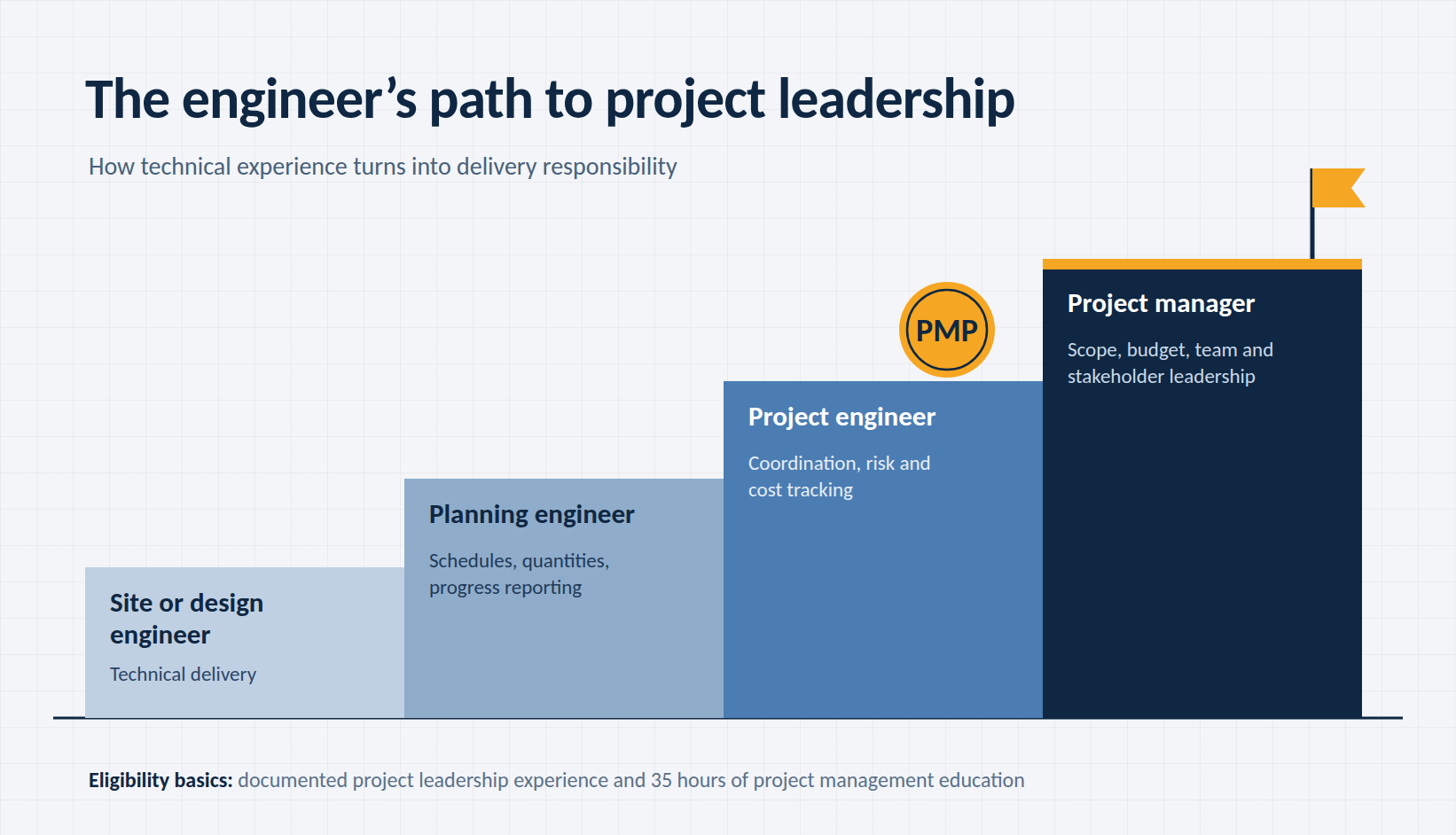
Most engineers in Pakistan start their careers solving technical problems: designing structures, commissioning substations, troubleshooting plant equipment. Over time, the work changes. Deadlines, budgets, subcontractors and client expectations start to matter as much as drawings and calculations. At that point, many engineers find that technical skill alone no longer explains who gets to lead the project.
This is why PMP certification for engineers in Pakistan has become a common career topic in construction, energy, manufacturing and infrastructure. Engineers who want to move into leadership often look for a recognized way to show they can plan, manage risk and deliver results. Those looking for a structured route can start with this overview of PMP certification in Pakistan, then read the sections below to see how the roadmap works for engineers.
What Is PMP Certification?
The Project Management Professional (PMP) credential is issued by the Project Management Institute (PMI), a global association for project professionals. It is widely recognized across industries because it tests both knowledge and real-world judgment, not just terminology.
The certification covers how to lead teams, manage stakeholders, control scope, schedule and cost and deliver outcomes that matter to the business. It also recognizes that projects are not all run the same way. Predictive (traditional), agile and hybrid approaches are all part of the exam content, which reflects how projects are delivered today.
PMI revises the exam from time to time, so candidates should always check what is current. This breakdown of the PMP exam changes for 2026 explains what shifted and why it matters for anyone planning their timeline.
Why Should Engineers in Pakistan Consider PMP Certification?
Engineers already carry much of what project management requires. They understand technical constraints, read specifications and know how work is actually built. What many lack is formal training in the management side: structured planning, risk handling, stakeholder communication and budget control.
PMP preparation fills that gap. Engineers learn to:
- Break scope into manageable work packages and sequence activities realistically
- Identify and respond to risks before they become delays
- Communicate clearly with clients, consultants, and site teams
- Track cost and schedule performance with consistent methods
These skills apply well beyond construction. Power, oil and gas, manufacturing, telecom and IT all run on projects, and all need people who can connect technical detail with delivery discipline.
One point deserves honesty: the certification does not guarantee a promotion or a higher salary. What it does is give engineers a recognized framework and a credible signal to employers. Results still depend on experience, performance and the job market. Those considering a longer-term move can also read this guide to project management career advice.
PMP Eligibility Requirements for Engineers in Pakistan
PMI sets the eligibility rules and they depend on educational background. In general:
- Four-year degree holders (which includes most engineering graduates) need documented experience leading projects within a defined recent period, plus 35 hours of project management education.
- Candidates without a four-year degree need a longer period of project leadership experience, plus the same 35 hours of education.
Leading projects does not require the title of project manager. A site engineer who coordinated a work package, a planning engineer who managed schedules and reporting or an electrical engineer who led a commissioning phase may all have relevant experience, provided it is described accurately.
That last point matters. The application asks candidates to document projects, roles and responsibilities, and PMI can audit applications. Engineers should keep records such as project dates, scope and team size, and describe their work in project management terms. For a detailed walkthrough, see this guide to the requirements for Project Management Professional certification. Candidates should always confirm the current rules on the official PMI website before applying.
How to Get PMP Certification in Pakistan
The process is straightforward when taken one step at a time:
- Check eligibility. Confirm education and project leadership experience against PMI’s current requirements.
- Complete the 35 hours of project management education. This can come from an authorized training provider, which is explained further in this article on why an Authorized Training Partner matters.
- Submit the application to PMI. Describe projects clearly and truthfully.
- Prepare for the exam. Use the official outline, practice questions and mock exams.
- Schedule and sit the exam. Candidates in Pakistan can look at the options in this comparison of the PMP exam in Pakistan, Pearson VUE versus online.
For a fuller explanation of each stage, this guide on how to get PMP certification is a useful companion and the full PMP certification timeline for 2026 helps candidates plan realistic dates.
PMP Certification Cost in Pakistan
The total cost is made up of several parts: the PMI exam fee, the training course, study materials and a possible retake. Each can change the overall budget.
Two factors make the figure hard to fix. First, PMI fees are set in US dollars and differ for PMI members and non-members, so the amount in rupees moves with the exchange rate. Second, training fees vary by provider, format and what is included.
Engineers should therefore check the current fee schedule on the PMI website before budgeting, and ask any training provider for a clear breakdown. Choosing the cheapest option is not always the best value. A course that leads to a first-attempt pass can cost less overall than one that leads to a retake. For help comparing options, see this guide on how to choose a PMP training provider.
Career Opportunities for PMP-Certified Engineers in Pakistan
PMP does not replace engineering knowledge. It adds a leadership layer on top of it. Engineers with both are often considered for roles such as:
- Project engineer
- Planning and scheduling engineer
- Project coordinator
- Project manager
- Contracts or project controls roles
These roles appear in construction and infrastructure, oil and gas, power and renewable energy, manufacturing, telecom and technology. Engineers who work with international clients or contractors may find that a globally recognized credential is easier for hiring managers to understand.
Salary and opportunity vary widely by industry, years of experience, employer and city. Certification can support a stronger profile, but it works best alongside real project results. Engineers interested in guided support for these decisions can explore career advisory services, while employers building project capability across teams may prefer corporate training.
Tips to Prepare for the PMP Exam
The PMP exam is scenario-based. It asks what a project manager should do in a situation, which is different from the formula-driven exams many engineers are used to. A few habits make preparation more effective:
- Build a realistic schedule. Working engineers often manage preparation around site hours, so a steady weekly routine works better than last-minute cramming. This PMP study plan for working professionals shows how to structure it.
- Study the official outline. The PMP examination content outline shows which domains and tasks the exam covers.
- Practice scenario questions. Mock exams help candidates learn how PMI frames the best answer.
- Learn the language of project management. Terms such as stakeholder engagement, change control, and risk response have specific meanings.
- Pick the right learning format. Some candidates prefer instructor-led sessions through live PMP classes. Others do better with a self-study bundle or personalized one-on-one training. This comparison of PMP live classes versus self-study can help decide.
Candidates unsure about difficulty can read how hard the PMP certification test really is, and those who want a feel for the teaching style can try a PMP class preview.
Is PMP Certification Worth It for Engineers in Pakistan?
For many engineers, yes particularly for those already coordinating work, managing teams or aiming to move from technical delivery into leadership. Mid-career engineers in project-driven industries often benefit most, because they have the experience to meet eligibility rules and the exposure to apply what they learn.
It may be less useful for engineers who plan to stay in purely technical or research roles. The decision comes down to a few honest questions: what role is the engineer aiming for, how much experience is already documented, how much study time is realistic and what budget is available.
Frequently Asked Questions
Can a fresh engineering graduate apply for PMP?
Not usually. PMP requires documented experience leading projects, so fresh graduates typically need several years of work first. Entry-level credentials such as CAPM are designed for people earlier in their careers.
Does PMP accept engineering experience from site work?
Yes, if the work involved leading or directing project tasks. The experience must be described accurately in project management terms, and the application must reflect real responsibilities.
Is the 35-hour training mandatory?
Yes. PMI requires 35 contact hours of project management education for eligibility unless the candidate holds the CAPM credential.
How long does PMP preparation take?
It depends on background and available time. Many working professionals study for a few months, but the right pace is personal.
Is PMP recognized outside Pakistan?
Yes. It is a globally recognized credential, which is one reason engineers consider it when targeting international employers or projects.
Does PMP guarantee a higher salary?
No. It can strengthen a professional profile, but pay depends on experience, industry, employer and location.
Final Thoughts
The path from technical expert to project leader rarely happens by accident. Engineers who combine strong technical foundations with structured project management skills are often better positioned for broader responsibility. PMP certification is one recognized way to build and demonstrate those skills, provided the candidate meets the requirements, prepares carefully and treats the credential as a tool rather than a shortcut.
The best first step is simple: check eligibility, review the official PMI requirements and plan preparation around real working life.
What is your next career goal as an engineer in Pakistan: staying technical, moving into project leadership or something in between? Share your thoughts in the comments below.